
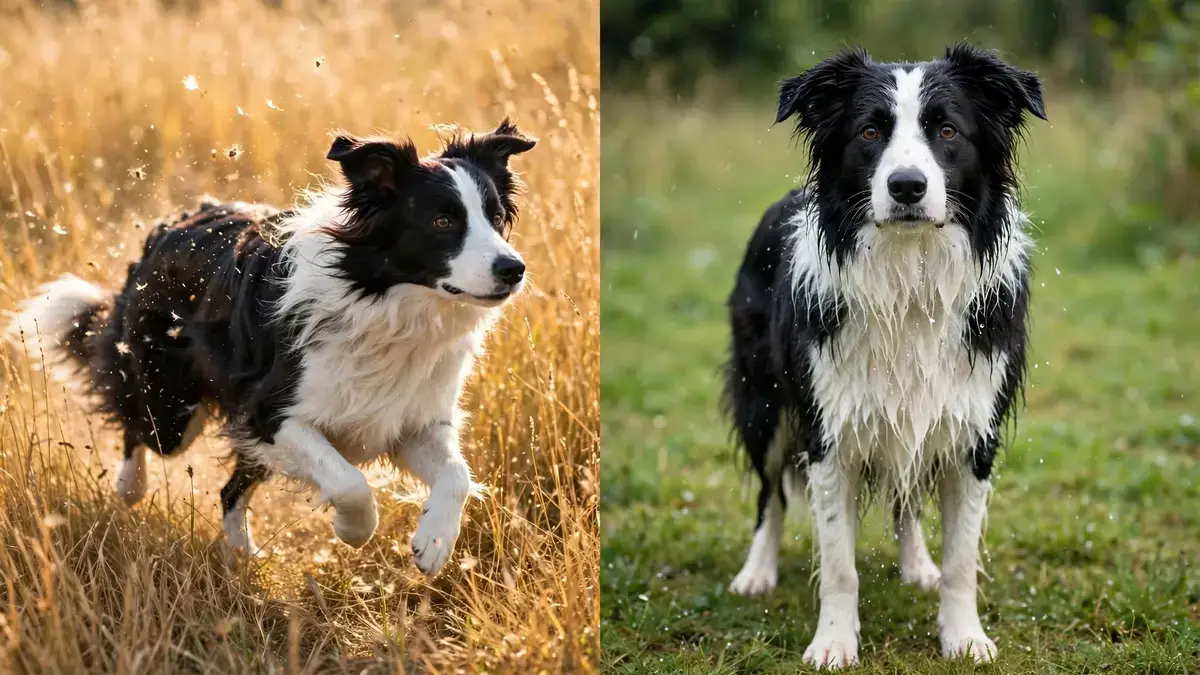
Brush a Border Collie two or three times a week, and every day during shedding season. Bathe them when the coat gets dirty, which for most dogs means every four to six weeks. Do not shave a double coat for summer: it insulates in both directions, and the AKC warns that shaving raises the risk of heatstroke.
A Border Collie is one of the most active dog breeds you can live with. That energy ends up in the coat: mud, burrs, pond water, and a double layer built for wet, cold weather. The routine is shorter than most owners expect. A 10–15-minute brushing session, two or three times a week, is often enough for routine maintenance.
Key Takeaways
- ✅ Brush two to three times a week. During seasonal coat blows, go daily with an undercoat rake.
- ✅ Bathe when the coat needs it. Four to six weeks is a useful starting point, but some dogs need more, and some need less.
- ❌ Do not shave a healthy double coat for summer. It insulates against heat and cold and blocks sun. Clipping is for medical needs or severe matting.
- ⚠️ Rough and smooth coats need the same routine. The rough coat just mats faster behind the ears and under the front legs.
- ✅ Check nails every two to four weeks and ears weekly. Clean ears only when they need it.
- ⚠️ Heavy shedding all year plus a dull coat is a vet question, not a grooming one.
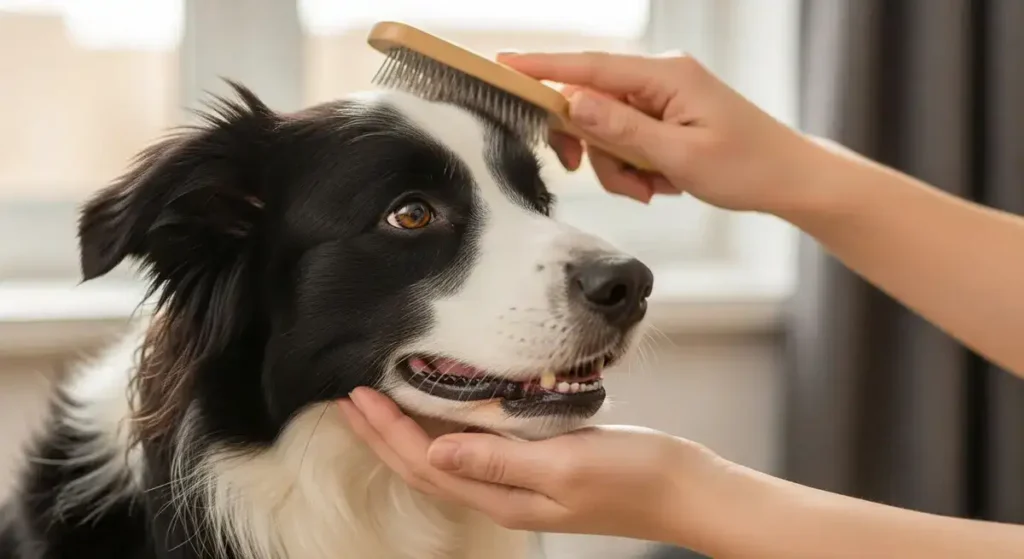
Table of Contents
| Quick fact | Border Collie |
|---|---|
| Coat type | Double coat, in a rough (medium-length, feathered) or smooth (shorter, coarser) variety |
| Brushing | Two to three times a week; daily in spring and fall |
| Bathing | When dirty; four to six weeks as a starting point |
| Nails | Check every two to four weeks |
| Ears | Check weekly; clean only when needed |
| Shaving | Never. The coat insulates and blocks sun. |
| Professional groomer | Optional. Worth it for heavy mats, or a dog that will not tolerate handling |
How Often Should You Groom a Border Collie?
Plan on fifteen minutes of brushing three times a week. Add a bath every month or so, plus a weekly check of nails, ears, paws, and eyes. That covers the basic grooming routine.
The cadences below are a practical routine built from those sources, not a veterinary prescription. Two things move the numbers: the season, and how much time your dog spends in mud, burrs, and water. An active Border Collie that works sheep or runs trails daily needs more of everything than a dog that sleeps on the couch.
| Task | How often | What to know |
|---|---|---|
| Brush, rough coat | Two to three times a week | Daily during shedding season. The AKC suggests once or twice a week and more if the coat mats. |
| Brush, smooth coat | Twice a week | Same routine. Less matting, more short hair on your sofa. |
| Bath | Every four to six weeks | Brush first. Water tightens mats that were loose an hour earlier. |
| Nails | Check every two to four weeks | If the nails touch the floor when your dog stands, they are due. |
| Ears | Check weekly | Clean when they look or smell dirty. Some dogs need it monthly, some rarely. |
| Paws and eyes | Weekly | Trim pad fur, check for cracks, wipe eye discharge. |
Do Border Collies Shed a Lot?
Yes. Many Border Collies shed all year lightly and blow their undercoat twice a year, in late spring and late fall. Those heavier stretches can run several weeks, and daily brushing stops being optional while they last.
The shedding is not the top coat falling out. It is the undercoat turning over. That soft, dense layer sits next to the skin and does the insulation work. When the seasons change, the dog sheds most of it in a few weeks. The guard hairs stay put.
Expect tufts of gray-white fluff on the floor. Clumps collect in the grass where your dog rolled, and hair works into every fabric in the house. It looks alarming the first time. It is normal.
| Season | What is happening | What to do |
|---|---|---|
| Late spring Apr to Jun | Winter undercoat drops. Tufts on the floor. | Rake daily. Bath at the start. |
| Summer Jul to Aug | Light shedding. Thinnest coat. | Brush twice a week. No clipping. |
| Late fall Oct to Nov | Second blow for many dogs. Heavy for several weeks. | Rake daily until it slows. |
| Winter Dec to Mar | Shedding may become lighter. | Brush two or three times a week. Check for mats after wet walks. |
Timing moves with climate, daylight, and the individual dog. A dog that lives indoors under lights may blow later, or in a slow trickle instead of a burst. Some Border Collies never follow the pattern cleanly.
How to Cut Down the Fur in Your House
Brushing is the main way to remove hair before it lands. A rake gets the undercoat, and a slicker takes what the rake lifted. A pass with a wide-toothed comb tells you whether you missed a patch.
Bathing at the start of a coat blow helps too. Warm water and shampoo loosen the undercoat, and a high-velocity dryer pushes out a lot of what is left. VCA notes that dogs with a heavy undercoat benefit from a bath in spring or fall, right when they are shedding.
For the house, keep washable throws on the furniture and a vacuum with a real brush bar. A rubber squeegee lifts hair from upholstery faster than suction alone.
When Shedding Means Something Is Wrong
Normal shedding is even and seasonal. Call your vet if you see bald patches or thinning in a pattern. Red or greasy skin counts too, and so does a coat that stays dull no matter how well you feed and brush.
VCA puts it plainly: a healthy dog does not shed excessively and has a shiny coat. If the coat has changed and the grooming has not, the cause is usually underneath the skin. Our guide to Border Collie health concerns covers the conditions that show up in the coat first.
Understanding the Border Collie’s Double Coat
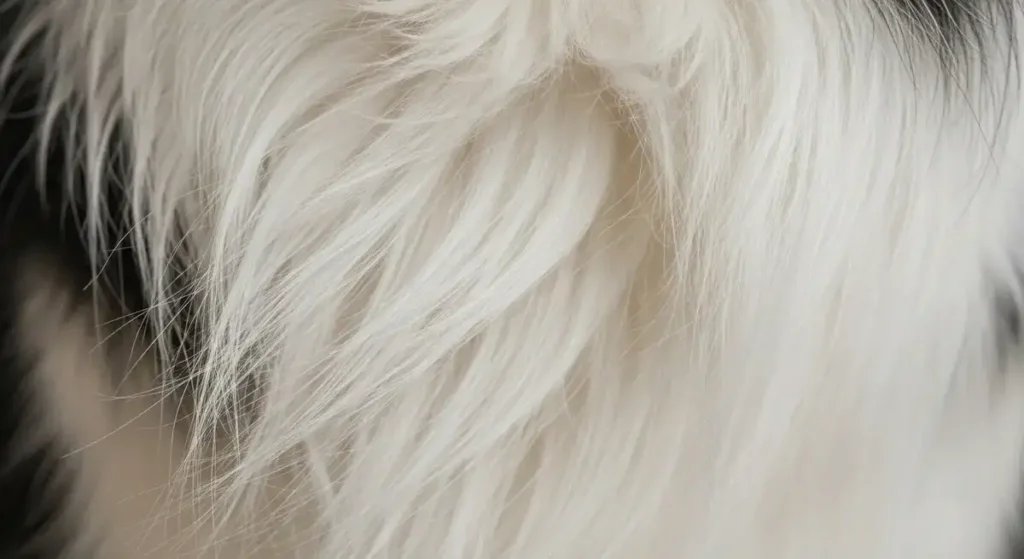
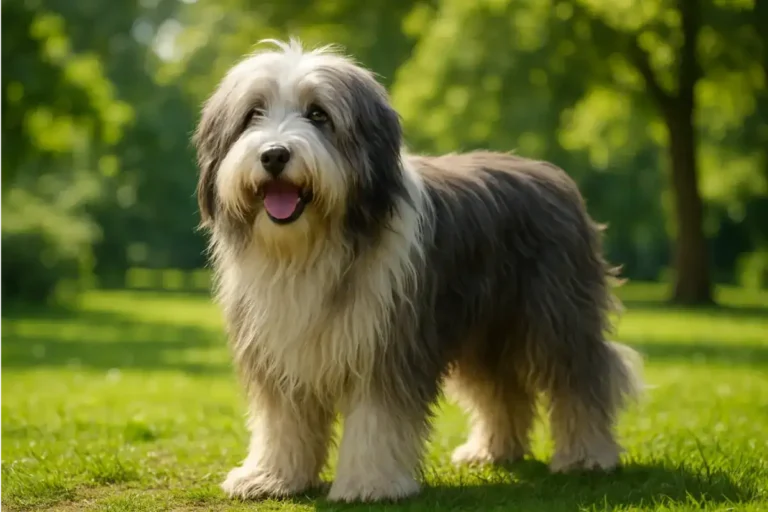
Two layers, two jobs. The outer layer is made of longer, tougher guard hairs that shed water and block sun. The undercoat is soft and dense, and it traps a layer of air next to the skin. Both are covered in more detail in our Border Collie physical profile.
That trapped air is insulation, and insulation works in both directions. In summer, it slows heat coming in. In winter, it holds warmth. The outer coat also helps protect the skin from direct sunlight.
This is why a Border Collie can work outdoors in wind and rain and stay comfortable for longer. The coat is not decoration. It is equipment.
Why Shaving Backfires
Shaving feels like the kind thing to do in a heatwave. It is not. Dogs cool mostly by panting and by dilating blood vessels in the ears and face. The coat does a different job: it traps air and slows heat moving in either direction. The AKC’s guidance is that shaving a double coat removes that insulating layer. It also leaves the skin exposed to the sun and can make a dog more likely to overheat.
Regrowth is the other problem. Shaved double coats may grow back unevenly or slowly. VCA describes post-clipping alopecia, a rare complication where regrowth is delayed for up to two years, and it turns up most often in plush-coated breeds.
Trimming is fine in the places where hair collects dirt and ice: the fur between the paw pads and a hygiene trim around the rear. If a vet needs to clip for a medical reason, VCA’s guidance is to leave at least an inch of coat to protect the skin.
Do Border Collies Need Haircuts?
No. A Border Collie does not need a full haircut. Both coat varieties are double-coated, and the coat works best intact.
You can trim the fur between the paw pads and tidy the rear for hygiene. A light tidy of feathering that drags through mud is fine too. The AKC notes that trimmed leg and stomach hair can help a dog stay comfortable in warm weather. Leave the body coat alone unless a vet recommends clipping for a medical reason.
Brushing is what keeps a Border Collie looking tidy. It removes the loose undercoat that makes the dog look shaggy, and it does the job a haircut is supposed to do.
Rough Coat vs Smooth Coat Border Collies: What’s the Difference?
Both varieties are double-coated. The AKC’s breed page gives the same routine for each: a pin brush once or twice a week. In shedding season, that becomes daily.
What differs is how the coat behaves. The rough coat carries longer feathering on the legs, chest, and belly, and that is where mats start. The smooth coat has shorter hair all over, sheds those short hairs into fabric, and still mats if you skip brushing.
| Coat | Where it tangles | Shedding pattern | Grooming |
|---|---|---|---|
| Rough Medium-length, feathered on the legs and chest | Behind the ears, under the front legs, around the tail | Longer tufts you can pick up | Pin brush, then comb the feathering |
| Smooth Shorter, coarser, close to the body | Under the collar, behind the ears | Short hairs that weave into upholstery | Same routine, quicker passes |
Best Brushes and Grooming Tools for Border Collies
You do not need a cupboard full of gear. A few basic tools cover almost everything, and the rest are conveniences.
| Tool | What it does | When to reach for it |
|---|---|---|
| Slicker brush | Lifts loose hair and smooths the topcoat | Finishing pass, every session |
| Undercoat rake | Reaches under the guard hairs to pull dead undercoat | Shedding season, and any dog that mats |
| Pin brush | Fluffs the coat and spreads skin oils | Weekly maintenance |
| Wide-toothed comb | Finds the mats the brush slid over | After brushing, especially in feathering |
| Blunt-nosed scissors | Trims fur between the paw pads | Paw care only, never on mats |
| Nail clippers or grinder | Shortens nails | Every two to four weeks |
| Styptic powder | Stops bleeding if you catch the quick | Keep it open beside you |
| High-velocity dryer | Dries the undercoat and blows out loose hair | After a bath, if you have one |
Two cautions. A slicker with sharp wire tips scratches skin, so test it on the back of your hand first. And a blade-style de-shedding tool held flat against the skin can cut guard hairs, which is the last thing a double coat needs. A high-velocity dryer is optional. If you use one, keep the heat low, keep the nozzle moving, and never hold it against the skin.
How to Brush a Border Collie
Brush before the bath, never after. Water can tighten a tangle that was workable an hour earlier. A mat that loosens on a dry coat can become a clip job once it is wet.
- Start with the rake. Work along the back and sides, following the hair.
- Part the coat in lines. Lift a section, brush from the skin out, then move an inch over.
- Follow with the slicker. Short strokes, same direction as the hair grows.
- Check the hot spots. Behind the ears, armpits, tail base, under the collar.
- Comb the feathering. Legs and chest, where the long hair tangles.
- Finish with a treat. The dog should expect grooming to end well.
Line brushing is the part people skip. Running a brush over the surface feels productive and leaves the undercoat untouched. Part the coat into sections and work from the skin outward, so you reach the full depth without scraping the skin. It is slower, but it reaches loose undercoat and tangles close to the skin. Work gently through small sections rather than repeatedly brushing the same surface.
Bathing Your Border Collie
Most Border Collies need a bath every four to six weeks. The AKC’s bathing guidance puts a medium-to-large coat anywhere from weekly to every four to six weeks, depending on how dirty the dog gets. VCA treats bathing as occasional, driven by dirt and odor rather than a calendar.
That is a wide range on purpose. Four to six weeks is a starting point, not a rule. A dog that swims in ponds needs more baths. A dog that walks on pavement and sleeps indoors can go longer.
The Bath, Step by Step
- Brush out every mat first. Water can tighten a tangle into a mat a comb will not shift.
- Use lukewarm water and soak down to the skin, not just the topcoat.
- Dilute the shampoo. Thick coats rinse better when the shampoo is thinned with water first.
- Work it through, then rinse longer than feels necessary. Shampoo left in the undercoat irritates skin.
- Condition, then rinse again. Conditioner makes the next brushing easier.
- Towel, then dry with air. A high-velocity dryer reaches the undercoat a towel cannot.
Never Use Human Shampoo
Dog skin is thinner and has a different pH from ours. VCA’s guidance is blunt: human shampoo, including baby shampoo, is too harsh for a dog’s skin. For routine baths, a hypoallergenic dog shampoo with no added perfume is a reasonable choice. If your dog has a skin condition, your vet’s recommendation outranks any label.
If your dog has sensitive skin, ask your vet which shampoo to use before you buy anything. Oatmeal and aloe formulas are common recommendations, but a dog with a skin condition may need a medicated shampoo instead.
Drying Matters More Than You Think
Moisture trapped against the skin, especially under a mat, is one of the conditions that lets a hot spot start. VCA’s hot spot guidance lists matted fur and trapped water among the causes. VCA notes they can grow from a pinpoint to the size of a pancake in a day.
So dry all the way down. If you can part the coat and feel cool, damp air at the skin, keep going.
Border Collie Nail, Ear, Paw, Eye and Teeth Care
Nails
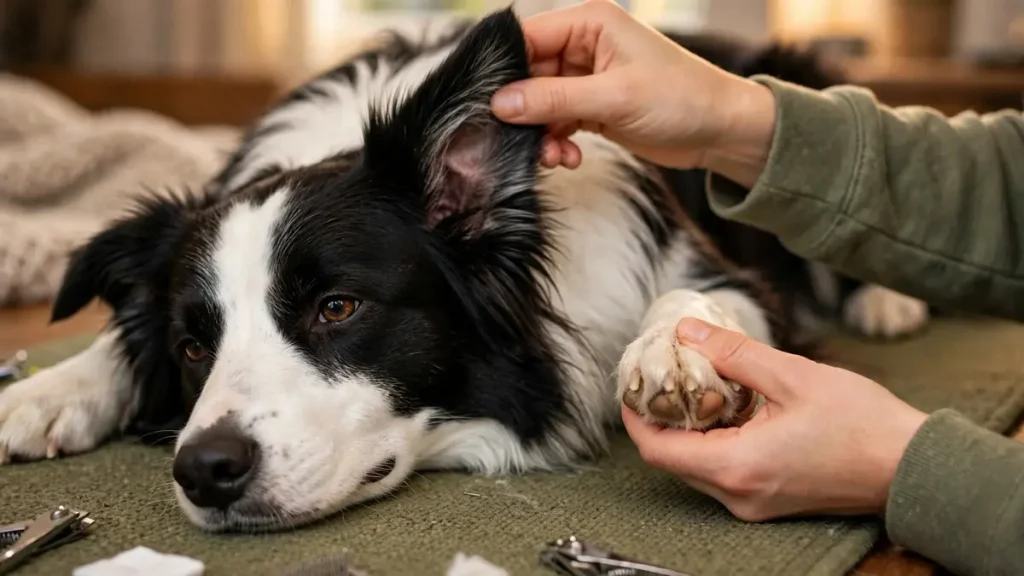
Check the nails every two to four weeks. On light nails, you can see the pink quick and stop short of it. On black nails, take thin slices and look at the cut surface after each one: a dark dot in the center means you are close.
Keep styptic powder or cornstarch within reach. If you do catch the quick, press a pinch onto the nail and hold it for a minute. It stings, so give the dog a break before you finish the rest.
Ears
Check the ears once a week. Clean them only when they need it: some dogs need a monthly clean, others almost never. VCA makes the same point, and warns that over-cleaning irritates the canal and can lead to the infections it is meant to prevent.
Use a vet-approved ear cleaner on a cotton ball, and never push a cotton swab into the canal. Redness, swelling, discharge, a bad smell, or repeated head shaking all mean a vet visit, not a deeper clean.
Paws
Trim the fur between the pads so it sits level with them. Long pad fur traps grit and ice, and it turns a Border Collie into a dog that skids on a wooden floor.
Check the pads after hard walks for cracks, thorns, and cuts. Hot pavement in summer and rock salt in winter both damage pads, and both are easy to avoid once you know to look.
Eyes
Wipe away normal eye discharge with a damp cloth. Clear or slightly cloudy gunk is routine. Yellow or green discharge, redness, squinting, or a sudden increase in tearing is a vet question.
Teeth
Teeth belong in the routine too. The AKC’s breed page lists tooth brushing among regular Border Collie care. VCA’s dental guidance puts the minimum at three brushes a week, with daily brushing as the target.
Use a dog toothbrush and dog toothpaste. Human toothpaste is not made to be swallowed, and some brands contain xylitol, which is toxic to dogs.
How to Prevent and Remove Border Collie Coat Mats
Prevention is the whole game. A mat starts as a tangle you did not find, and it tightens every time the dog lies down. Line brushing twice a week, plus a comb through the feathering, keeps most Border Collies mat-free. Our long-haired dog grooming guide covers the same technique for heavier coats.
When you find one, work from the outside in. Hold the mat between your fingers so the skin does not pull, and tease the outer edge apart with a comb or a detangling spray. Take small bites. A mat does not come out in one motion.
If a mat is tight against the skin, covers a large area, or makes the dog flinch, stop. VCA’s guidance is to use clippers rather than scissors for mat removal, because scissors near a moving dog can cut skin. A groomer or vet can clip it out in minutes.
Border Collie Puppy Grooming: When to Start
Start before the puppy needs anything done. Handle paws, ears, tail, and muzzle for a few minutes a day. This helps a puppy get comfortable with handling and nail trims as an adult. Add a treat after each one. It is the same handling work that supports early socialization.
Introduce the tools switched off. Let the puppy sniff the clippers and the rake, touch them to the shoulder, then put them away. Do that five times before you ever turn the dryer on.
Puppy coat turns over during the first year, and the adult coat comes in denser. That is when mats first appear behind the ears. If you have done the handling work early, the brushing is easy, and the dog stays easy to live with as an adult.
Do Border Collies Need Professional Grooming?
Most of the work is yours, and it should be. Brushing, bathing, nails, and ears are all home jobs, and doing them yourself keeps the coat in better shape between visits.
Three things justify a groomer: heavy mats, a dog that will not tolerate handling, and a coat that needs reshaping around the feet and rear. That last one is a skill, not a chore.
On price: quotes depend on your region, your dog’s size, the state of the coat, and whether the shop charges extra for mat removal. Rather than trust a national average, call three groomers near you and ask for a quote for a medium double-coated dog. Ask what they charge when the coat is matted, and whether they clip or scissor.
Four questions before you book: Have you worked with double-coated herding breeds? Do you ever shave a Border Collie? What do you do with a matted dog? Can I stay and watch the first time?
Border Collie Skin and Coat Problems to Watch For
Grooming is a weekly skin exam whether you meant it to be or not. You will find the lumps, the fleas, the hot spots, and the bald patches before anyone else does. Book a vet visit for any of these:
- A red, moist, painful patch that appeared in a day
- Bald patches, or hair loss in a pattern on both sides
- Greasy, scaly, or foul-smelling skin
- Constant scratching, licking, or head shaking
- Lumps, scabs, or anything that bleeds when brushed
- Nails that have grown into the pad
For skin and coat problems, the vet is the first stop, not the groomer. Clipping and bathing treat the symptom. They do not find the cause.
Frequently Asked Questions
How often should I brush my Border Collie?
Two or three times a week, and daily during shedding season. Use an undercoat rake first, then a slicker brush, and part the coat so you reach the skin rather than just the top hairs.
Do Border Collies shed a lot?
Yes. They shed all year lightly, and many blow their undercoat twice a year, in late spring and late fall. Each blow can run several weeks, and daily brushing is one of the best ways to keep the hair off your floor.
How often should I bathe my Border Collie?
Most Border Collies do fine on a bath every four to six weeks, but that is a starting point, not a rule. It depends on how dirty the coat gets and on your dog’s skin. Some need baths more often, and some go longer. Brush out tangles before the bath.
Do Border Collies need haircuts?
No. Their double coat is meant to stay intact, and brushing keeps it manageable. Trim the fur between the paw pads and tidy the rear for hygiene. Leave the body coat alone unless your vet recommends clipping.
Can I shave my Border Collie in summer?
No. The double coat insulates against heat as well as cold. Shaving raises the risk of heatstroke and leaves the skin exposed to sunburn, and regrowth can come back patchy. Trim paw pad fur and keep the coat brushed instead.
How often should I clean my Border Collie’s ears?
Check them weekly and clean them only when needed. Some dogs need a monthly clean, others rarely. Over-cleaning irritates the ear canal, so let what you find decide. Use a vet-approved ear cleaner and never push a cotton swab into the canal.
When is Border Collie shedding season?
Late spring and late fall, when the undercoat turns over for the season ahead. Expect several weeks of heavy shedding each time. Indoor lighting, climate, and the individual dog can all shift the timing, and some dogs shed in a slow trickle instead.
How do I stop my Border Collie from shedding so much?
You cannot stop it, because shedding is how the coat renews. You can remove the loose undercoat before it lands. Rake daily during a blow, bathe at the start of it, and use a high-velocity dryer after the bath. That is one of the best ways to keep hair off your floor and furniture.
How do I remove a mat from my Border Collie’s coat?
Hold the mat so the skin does not pull, then tease the outer edge apart with a comb or detangling spray. If the mat is tight to the skin or the dog flinches, stop and let a groomer clip it. Never cut a mat out with scissors.
How often do Border Collie nails need trimming?
Check them every two to four weeks. If the nails touch the floor when your dog stands, or you hear them click on walks, they are due. Trim small amounts at a time and keep styptic powder nearby in case you catch the quick.
When should I start grooming a Border Collie puppy?
Start once your puppy has settled into the home. Short daily handling sessions with treats, plus switched-off tools to sniff, build a dog that tolerates grooming. The adult coat arrives during the first year, and that is when brushing starts to matter.
Do Border Collies need a professional groomer?
Usually not. Brushing, bathing, nails, and ears are home jobs. A groomer is worth it for a badly matted coat, a dog that will not tolerate handling, or reshaping around the feet and rear.
How much does Border Collie grooming cost?
Quotes vary too much by region and coat condition to give one number. Call three local groomers, ask for a price on a medium double-coated dog, and ask what they charge for a matted coat before you book.
Related Dog Shedding Guides


Glossary
Guard hair: the long, coarse outer hairs that shed water and block sun.
Undercoat: the soft, dense layer next to the skin that traps air and controls body temperature.
Coat blow: the stretch, usually several weeks, when a dog sheds most of the undercoat, in spring and fall.
Quick: the blood vessel and nerve running through the middle of the nail.
Slicker brush: a brush with fine, bent wire pins, used to lift loose hair and smooth the topcoat.
Post-clipping alopecia: delayed regrowth after a coat is clipped short, which can take up to two years to resolve.
Sources
- American Kennel Club — Border Collie breed page (coat types, grooming frequency, shedding season)
- American Kennel Club — How often should you bathe your dog? (bathing range, monthly ear cleaning and nail trimming)
- American Kennel Club — Types of dog brushes for shedding coats
- American Kennel Club — How to trim dog nails
- American Kennel Club — Should you shave your dog in the summer? (double-coat insulation, heatstroke risk, sun protection)
- VCA Animal Hospitals — Grooming and coat care for your dog (mats, clippers, shaving, post-clipping alopecia, shampoo)
- VCA Animal Hospitals — Ear cleaning in dogs
- VCA Animal Hospitals — Hot spots in dogs
- VCA Animal Hospitals — Brushing your dog’s teeth
Medical Disclaimer
This guide is for information only and is not a substitute for veterinary advice. Grooming needs vary with coat, age, health, and lifestyle. If your dog has skin, ear, nail, or coat problems, or if grooming causes pain, talk to your veterinarian.

Leave a Reply
You must be logged in to post a comment.